
Affiliate Disclosure:Kid Sitting Safe is reader-supported. When you buy through links on our site, we may earn an affiliate commission at no additional cost to you. This does not influence our reviews or recommendations — we only recommend products we genuinely believe in.
Chicco OneFit LX ClearTex All-in-One Car Seat
Chicco's current all-in-oneThe seat that follows the NextFit in Chicco's range. Keeps the SuperCinch tightener, adds LeverLock for belt installs, and carries a child to 100 lbs in booster mode against the NextFit's 65 lb harness ceiling.
What We Like
- Covers all three modes in one shell, rear-facing 5-40 lbs through booster to 100 lbs, so it replaces both a convertible and a booster purchase
- LeverLock self-tensioning lock system tightens a forward-facing seat belt install with an open-route-close motion, Chicco's answer to Britax's ClickTight
- SuperCinch LATCH tightener carried over from the NextFit, the feature that line was known for
- ClearTex fabrics are made without added flame retardant chemicals, PFAS, BPA or phthalates, and the seat is GREENGUARD Gold certified for low chemical emissions
- Meets FMVSS 213b frontal and FMVSS 213a side impact standards, and is FAA certified for aircraft use in harness mode
- 10-year lifespan, two years longer than the NextFit line it follows
What We Don't
- Heavy at 25.5 lbs, so it is a seat to install once and leave rather than move between cars
- Forward-facing harness mode starts at 26.5 lbs, later than seats that start at 22, so a small toddler stays rear-facing longer (a safety benefit, but it narrows the seat's usable window if you wanted to turn early)
- No backless booster mode, unlike some all-in-one seats that stretch to a backless stage
- 30-inch footprint when fully reclined is demanding in a compact car
The Chicco NextFit was Chicco’s flagship convertible car seat, known for its installation features and extended rear-facing capacity.
Chicco has retired the NextFit line. Their current all-in-one is the OneFit LX ClearTex, which keeps the SuperCinch tightener the NextFit was bought for, adds the LeverLock system for seat belt installations, and carries a child two stages further: to 100 pounds in booster mode, against the NextFit’s 65 pound harness ceiling. Everything below still describes the NextFit accurately, so read on if you already own one or you’re weighing up a seat passed down between siblings.
If you’re using one secondhand, check the “do not use after” date on the label before anything else, and don’t use a seat whose crash history you don’t know. The AAP advises avoiding used car seats with an unknown history and never using one that has been in a moderate or severe crash.
The review that follows examines whether the NextFit lived up to its reputation. If you’re comparing brands, see our Britax vs Chicco head-to-head comparison. Proper car seat installation is where NHTSA’s own field study found the most problems, and the NextFit’s SuperCinch system addresses the most common of those errors that compromise child safety.
At a Glance
| Specification | Details |
|---|---|
| Rear-Facing | 5-40 lbs (Zip) or 12-40 lbs (Sport), up to 43” |
| Forward-Facing | 22-65 lbs, up to 49” |
| Weight | 25 lbs (seat only) |
| Lifespan | 8 years from manufacture |
| Installation | SuperCinch LATCH + ReclineSure |
| FMVSS 213 Compliance | Yes, exceeds requirements |
| Harness Positions | 9 (no rethread adjustment) |
| Crotch Buckle | 2 positions |
| Side Impact Protection | DuoZone head and torso |
Installation: The NextFit’s Strength
SuperCinch LATCH Tightener
The SuperCinch system uses a ratcheting mechanism that multiplies your force, allowing you to achieve a tight installation with one hand. No knee-in-the-seat, no pulling with all your strength. NHTSA puts the combined misuse rate for car seats and boosters at 46%, and insufficient tightness is among the most common errors (learn more about how tight car seat straps should be). The SuperCinch directly addresses this common error.
How it works:
- Connect LATCH connectors to vehicle anchors
- Pull the SuperCinch strap
- The mechanism ratchets tight
- Test for less than 1 inch of movement
The point of the force multiplier is that parents with limited upper body strength can still reach the tight installation the manual asks for. Pro tip: Pull the SuperCinch strap straight out from the seat, not at an angle. The mechanism works most efficiently when force is applied in line with the strap path.
LATCH Weight Limits and Transitioning to Seatbelt
Chicco’s NextFit user guides set the LATCH lower-anchor limits by the child’s weight, not the combined weight of child and seat:
Rear-facing: lower anchors up to a 35 lb child
Forward-facing: lower anchors up to a 40 lb child
Above those weights, install with the vehicle seatbelt instead.
Seatbelt Installation Process
When your child exceeds LATCH weight limits, seatbelt installation becomes necessary. The NextFit includes a built-in lock-off mechanism that secures the seatbelt without requiring a locking clip.
- Route the seatbelt through the appropriate belt path (color-coded blue for rear-facing, red for forward-facing)
- Buckle the seatbelt
- Remove all slack from the lap portion
- Close the lock-off clamp to secure the belt
- Test for less than 1 inch of movement at the belt path
The lock-off prevents belt creep - the gradual loosening that occurs with vehicle movement over time.
ReclineSure Leveling
With 9 recline positions, the NextFit accommodates virtually any vehicle seat angle. The bubble level indicators show when you’ve achieved the correct angle for both rear and forward-facing. This is critical because according to AAP guidelines, proper recline prevents a young child’s head from flopping forward and potentially compromising the airway.
Rear-facing: The more reclined positions, with the level in the rear-facing zone; the most reclined for newborns
Forward-facing: The upright positions, with the level in the forward-facing zone
The ReclineSure foot adjusts independently of the seat base, allowing you to compensate for sloped vehicle seats. In many vehicles, achieving proper recline without an adjustment mechanism requires pool noodles or towel rolls under the seat - the NextFit eliminates this improvisation.
Vehicle Compatibility Considerations
The NextFit needs substantial front-to-back space when installed rear-facing. Measure your back seat before installing one in a compact vehicle, and expect the front passenger seat to move forward in smaller cars. Test the fit in your own vehicle.
Extended Rear-Facing Capacity
40-Pound Rear-Facing Limit
The NextFit allows rear-facing to 40 pounds. The AAP sets no age minimum, only the seat’s limits, and for most children this means rear-facing until age 3 or beyond - a practice known as extended rear-facing. According to the AAP’s policy statement on child passenger safety, rear-facing is recommended for as long as the child fits within the seat’s rear-facing limits.
The safety benefits are substantial: NHTSA estimates car seats reduce the risk of fatal injury by 71% for infants under 1, in passenger cars. Be careful with rear-facing-versus-forward-facing figures in circulation; the most quoted of them came from a 2007 paper in Injury Prevention that the journal retracted in 2018. NHTSA’s figure for toddlers aged 1 to 4 is a 54% reduction.
Height Limitations Matter More Than Weight
Many parents focus exclusively on weight limits, but height limitations often determine when a child outgrows rear-facing mode. The NextFit’s 43-inch rear-facing height limit is generous - approximately 95th percentile for a 4-year-old. However, the practical rear-facing height limit occurs when the top of the child’s head reaches within 1 inch of the top of the seat shell.
Check rear-facing height fit by measuring from the bottom of the seat to the shell top - your child’s head should not extend beyond this measurement minus 1 inch.
Comfort for Extended Use
The NextFit has 9 recline positions, and its headrest adjusts to 9 positions without rethreading the harness - simply squeeze the adjustment lever and slide. This no-rethread system saves time during the growth spurts common between ages 1-3.
For children nearing the 40-pound limit, the more upright rear-facing positions give more legroom while maintaining the safety benefits of rear-facing. Children this age typically fold their legs comfortably - crossed, to the side, or bent - positions that appear uncomfortable to adults but are natural and painless for young children.
Safety Features Beyond the Basics
DuoZone Side Impact Protection
The NextFit incorporates a two-zone side impact system: rigid side walls in the head area and energy-absorbing foam in the torso area. This dual approach addresses different injury mechanisms.
Head zone: The rigid structure resists intrusion and maintains survival space during a side collision, which is the crash type where a child’s head sits nearest the impact.
Torso zone: Energy-absorbing foam compresses during impact, extending the deceleration time and reducing peak forces on the chest and abdomen.
Harness System Design
The NextFit uses a 5-point harness with a chest clip, the standard US configuration.
Proper harness fit (per AAP guidelines):
- Tightness: You should not be able to pinch excess webbing at the shoulder after buckling
- Chest clip position: At armpit level, never on the stomach or neck
- Harness slot position (rear-facing): At or below shoulder level
- Harness slot position (forward-facing): At or above shoulder level
The NextFit’s 9 harness positions take a child through 65 pounds forward-facing. The Zip starts from newborn (5 lbs) with its included insert; the Sport has no insert and starts at 12 lbs.
Top Tether Requirements for Forward-Facing
When using the NextFit forward-facing, use the top tether: NHTSA recommends it for every forward-facing seat. The CDC puts the reduction in head movement at about 4-6 inches, which is the margin that keeps a child’s head off the front seat.
Never skip the top tether. FMVSS 213 itself holds a tethered seat to a tighter head-excursion limit than an untethered one.
Models Compared
NextFit Zip
- Zip-off cover (easiest cleaning)
- Premium fabric options including moisture-wicking materials
- Same safety features as the Sport, plus a newborn positioner that takes it down to 5 lbs
- Includes cup holder (removable)
The Zip’s cover unzips from the seat shell without removing the harness. This design is particularly valuable for:
- Families with children prone to motion sickness
- Potty training age children who may have accidents
- Messy eaters (toddler stage)
- Parents who prioritize being able to wash covers frequently
NextFit Sport
- Standard cover (requires partial harness removal for complete washing)
- Same safety features including SuperCinch and ReclineSure
- Same crash test performance
- No newborn insert, so rear-facing starts at 12 lbs rather than 5
- Budget savings vs. Zip
NextFit iX
- Discontinued model occasionally available through retailers
- Integrated cup holder (non-removable)
- Standard cover like Sport
- Compatible with Chicco KeyFit infant seat (transitional feature no longer emphasized)
Key Difference
The Zip’s removable cover was the reason to pay more for it if you expected frequent cleaning (toddlers, carsickness, etc.). The Sport’s cover can still be removed; it simply takes more effort.
From a safety perspective, all NextFit models meet identical FMVSS 213 requirements and undergo the same internal testing protocols. The differences are convenience-related, apart from the Sport’s 12 lb minimum.
Strengths and Drawbacks
Strengths
- Installation: SuperCinch is built to take the strength out of a tight LATCH install, which matters given NHTSA’s data on installation errors.
- Harness adjustment: The no-rethread system saves time during growth spurts.
- Grows with child: The 40-pound rear-facing limit and 65-pound forward-facing limit provide years of use.
Drawbacks
- Bulky for compact cars: At 25 pounds and with a deep rear-facing footprint, the NextFit can compromise front seat legroom in smaller vehicles. This is a physics reality of any seat offering extended rear-facing - greater rear-facing capacity requires more space.
- No booster mode (convertible only): Unlike all-in-one seats, the NextFit maxes out at 65 pounds in harness mode. Families seeking a single seat from birth to booster age should consider all-in-one alternatives.
- Plush cover: Thicker padding is warmer in hot climates. Don’t add an aftermarket cooling liner; the AAP advises against extra products that didn’t come with the seat.
- Weight: At 25 pounds, the NextFit is heavy for parents who need to move the seat between vehicles frequently. Consider dedicating this seat to one vehicle.
Cleaning and Maintenance
The NextFit Zip cover is machine washable (gentle cycle, cold water, line dry). Parents should clean the cover every 2-3 months or as needed for spills. The harness straps should never be submerged or machine washed - spot clean only with mild soap and water, as washing can compromise the webbing’s integrity in a crash.
Between full cleanings, vacuum the seat to remove crumbs and debris from the buckle area, where food particles can stop the buckle working properly.
Comparison: NextFit vs Competitors
| Feature | NextFit Zip (retired) | Graco Extend2Fit | Britax Boulevard (retired) |
|---|---|---|---|
| Rear-Facing Limit | 40 lbs | 50 lbs | 40 lbs |
| Installation | SuperCinch | Standard LATCH | ClickTight |
| Booster Mode | No | 3-in-1 only (to 100 lbs) | No |
| Price Tier | Mid-Range | Mid-Range | Premium |
| Recline Positions | 9 | 6 | 7 |
| No-Rethread Harness | Yes | Yes | Yes |
| Seat Weight | 25 lbs | 19-21 lbs | 29 lbs |
| FAA Approved | Yes | Yes | Yes |
| Lifespan | 8 years | 10 years | 10 years |
| Side Impact Protection | DuoZone | Integrated | SafeCell |
When the Graco Extend2Fit Makes More Sense
The Graco Extend2Fit offers a 50-pound rear-facing limit, 10 pounds more than the NextFit. Be careful which one you buy though: only the Extend2Fit 3-in-1 converts to a highback booster, which Graco rate at 40 to 100 pounds, 43 to 57 inches, and at least 4 years old. The plain Extend2Fit Convertible is harness-only and stops at 65 pounds forward-facing. The 3-in-1’s all-in-one design gives the longer theoretical lifespan. Either way, the Extend2Fit uses standard LATCH without a tightening mechanism, making proper installation more challenging for some parents.
Choose the Extend2Fit if:
- Your child is in a high percentile for weight (likely to benefit from 50-lb rear-facing capacity)
- You want a single seat from birth through booster age
- Your vehicle has relatively flat back seats (easier to achieve proper installation without ReclineSure)
- Budget is a primary concern
Where the Britax Boulevard Fits
The Britax Boulevard used the ClickTight installation system: open the panel, route the seatbelt, and close it. Britax has retired the Boulevard too, so like the NextFit it’s only relevant if one is already in your family. If ClickTight is what you want in a new seat, Britax’s current convertible with it is the Poplar S.
Who a NextFit Still Suits
You can’t buy a NextFit new, so this is about whether one you already have, or one being handed down, fits your family.
A NextFit Works Well If:
- It’s within its expiry date and you know its crash history
- Extended rear-facing is a priority - 40 pounds keeps most children rear-facing to age 3-4
- You value multiple recline positions - the 9 positions accommodate various vehicle seat angles and child comfort preferences
- You own a mid-size or larger vehicle - the seat’s footprint works best with adequate space
- The time left before its 8-year expiry covers the years you need it for
Look at a Current Seat If:
- You need an all-in-one (booster mode) → Graco Extend2Fit 3-in-1, not the plain Extend2Fit Convertible, or Chicco’s current all-in-one, the OneFit LX ClearTex, which runs 5-40 pounds rear-facing, 26.5-65 pounds in the harness and 40-100 pounds as a highback booster. Chicco has retired the Fit4 and the NextFit, so don’t shop for either
- You want absolute easiest installation → Britax ClickTight system
- You have a compact car → Diono Radian (narrower footprint) or Clek Fllo (designed for compact vehicles)
- Your child is in the 95th+ percentile for weight → Extend2Fit’s 50-lb rear-facing limit
- You need to move the seat daily → Lighter weight convertible or keep dedicated infant seat longer
- Budget is extremely tight → Safety 1st Grow and Go (budget-priced 3-in-1 convertible, FMVSS 213 compliant)
Ideal Family Profile
The NextFit works best for families who:
- Drive mid-size or larger vehicles with adequate back seat depth
- Prioritize extended rear-facing per AAP recommendations
- Value ease of proper installation (backed by NHTSA research on installation errors)
- Plan to keep the seat in one vehicle most of the time
- Have children of average to slightly above-average size
- Prefer not to purchase a separate booster seat (will use the harness to 65 lbs, then transition to a high-back booster)
Installation Tips
These follow standard installation practice; where your NextFit’s manual says something different, the manual wins:
Rear-Facing Installation
-
Start with the middle position if possible: The center seat is the safest position (farthest from side impact zones), though not all vehicles accommodate car seats in the center.
-
Use the appropriate recline for your child’s age: Newborns need the most reclined positions to keep airways open. As babies develop neck strength, the manual allows more upright rear-facing positions, which also saves front seat legroom.
-
Test the recline after tightening: Sometimes the act of tightening the SuperCinch will shift the recline angle slightly. Recheck the bubble level after achieving a tight installation.
-
The 1-inch rule applies at the belt path: Test movement at the belt path (where the LATCH or seatbelt threads through), not at the top of the seat. Many parents mistakenly test at the headrest, where significantly more movement is normal and acceptable.
Forward-Facing Installation
-
Always use the top tether: NHTSA recommends it for every forward-facing seat. The tether anchor location is marked in your vehicle (typically on the rear shelf or back of the seat).
-
Tighten the tether last: Install the seat with LATCH or seatbelt first, then attach and tighten the tether. This sequence prevents the seat from tipping back when you transition from rear to forward-facing.
-
Upright recline positions only: Use the forward-facing positions the manual specifies, and check the ReclineSure indicator’s forward-facing zone.
-
Check harness slot position: Switch to at-or-above-shoulder-level harness slots when transitioning to forward-facing. This may mean adjusting the headrest even if you recently adjusted it while rear-facing.
Long-Term Value and Lifespan
8-Year Expiration Date
The NextFit expires 8 years from the date of manufacture (stamped on the seat). This is shorter than some competitors offering 10-year lifespans but aligns with Chicco’s conservative approach to material degradation.
Typical use scenarios:
- One child: Birth to 65 lbs (approximately ages 0-6), then transition to booster. The seat will not expire before your child outgrows it.
- Two children (2-3 years apart): Use with first child approximately ages 0-4, then with second child ages 0-4. The seat remains valid if the second child starts using it by age 4 (assuming seat was purchased near first child’s birth).
- Two children (4+ years apart): The seat may expire before the second child finishes using it, depending on exact timing.
Resale Value Considerations
Do not buy or sell used car seats unless you know the seat’s complete history. According to NHTSA guidelines, you should never use a car seat that has been in a moderate or severe crash, has visible damage, is missing pieces, or has an unknown history.
However, if passing a seat between siblings or close family members (where you know the seat’s complete history), its 8-year lifespan and extended rear-facing capacity make it suitable for multiple children when timing aligns.
Further Reading
- Maxi-Cosi Mico Review: Lightest Premium Infant Car Seat
- Best Car Seats for Special Needs Children: Roosevelt, Carrot & More
- Evenflo Embrace LX Review: Budget-Friendly Infant Car Seat
Final Verdict
The Chicco NextFit was a strong middle-ground option in the convertible car seat market. Its SuperCinch installation system addresses the most common error cited in NHTSA data - insufficient tightness - while the 40-pound rear-facing limit aligns with AAP recommendations for extended rear-facing.
Best suited to, if you already have one: Families prioritizing ease of correct installation, extended rear-facing capacity, and multiple recline positions, who drive mid-size or larger vehicles and plan to use the seat as a dedicated installation in one vehicle.
Look elsewhere if: You need booster mode (all-in-one functionality), drive a compact car requiring minimal space, need to move the seat between vehicles daily, or have a child in the 95th+ percentile who may benefit from the Graco Extend2Fit’s 50-pound rear-facing capacity.
Chicco no longer makes the Zip or the Sport. If you’re buying new, the seat that follows them in Chicco’s range is the OneFit LX ClearTex, which keeps the SuperCinch tightener and adds a booster mode to 100 pounds.
From a pure safety perspective, all NextFit models exceed FMVSS 213 requirements and incorporate features that facilitate correct use - arguably the most important factor in real-world child passenger safety. Proper installation and use matter more than the differences between seats that all meet federal safety standards.
If you already own a NextFit that’s within its expiry date and has a known history, its strengths, installation ease and extended rear-facing capacity, haven’t changed.
Also Consider
Chicco NextFit Zip
Best Chicco convertibleBest for extended rear-facing with superior comfort features.
What We Like
- SuperCinch LATCH tightener for easy secure installation
- 9-position recline accommodates various vehicle seats
- Zip-off washable cover removes without uninstalling seat
- ReclineSure leveling system ensures proper angle
What We Don't
- Does not convert to booster mode
- Bulkier footprint than compact convertible options
- 40-pound rear-facing limit lower than some competitors
Chicco NextFit Sport
Best budget optionBudget-friendly NextFit with core safety and comfort features.
What We Like
- Same safety features as Zip model
- Lower price point than Zip version
- SuperCinch LATCH tightener for secure installation
- 9-position recline for optimal positioning
What We Don't
- Standard cover is not removable without uninstalling seat
- Limited color options compared to Zip model
- Bulkier footprint than compact convertibles
Sources & Research
Continue Reading
Explore more car seat reviews content or browse our other categories.
Frequently Asked Questions
- How long can my child use the Chicco NextFit rear-facing?
- The Chicco NextFit accommodates children rear-facing up to 40 pounds and 43 inches tall, from 5 pounds on the NextFit Zip and 12 pounds on the NextFit Sport. For most children, this means they can remain rear-facing until approximately age 3-4, depending on their growth pattern. The 40-pound rear-facing limit supports extended rear-facing, which the AAP recommends until the child reaches the seat's limit. The 9-position ReclineSure system ensures proper angle as your child grows. Always check that your child's head is at least 1 inch below the top of the headrest and that the harness straps are at or below shoulder level for rear-facing.
- Is the Chicco NextFit easy to install?
- Yes, the Chicco NextFit is among the easier convertible seats to install thanks to its SuperCinch LATCH tightener and ReclineSure leveling system. The SuperCinch uses force-multiplying technology to achieve a tight installation with minimal effort - no knee-in-the-seat wrestling required. The ReclineSure system provides 9 recline positions to achieve the proper angle for both rear and forward-facing. Bubble level indicators show when you've achieved the correct angle. While not as foolproof as Britax's ClickTight, the NextFit's installation system is significantly easier than standard LATCH or seat belt installations found on budget seats.
- What is the difference between NextFit Zip and NextFit Sport?
- The Chicco NextFit Zip and Sport share the same safety features and installation systems, but not the same starting weight. The primary difference is the seat cover: the Zip features a zip-off cover that can be removed without uninstalling the seat, making cleaning significantly easier. The Sport has a standard cover that must be unthreaded from the harness for removal. The Zip also offers premium fabric options and additional color choices. The Sport cost less while both were on sale. Both go to 40 pounds rear-facing and 22-65 pounds forward-facing, with SuperCinch installation, but the Zip starts rear-facing at 5 pounds with its newborn positioner and the Sport, which has no newborn insert, starts at 12 pounds.
- Can the Chicco NextFit be used for newborns?
- The NextFit Zip can, from 5 pounds; the NextFit Sport can't, since Chicco rate it from 12 pounds and it has no newborn insert. The Zip includes a removable newborn positioner (head and body insert) that provides proper positioning for infants 5-11 pounds. The 9-position recline allows you to achieve the proper 45-degree angle for newborns. However, some parents prefer dedicated infant seats (like the Chicco KeyFit) for newborns because they offer portability - the ability to remove the carrier while baby sleeps. The NextFit is a stationary installation. If you don't need portability, the NextFit Zip works well from birth. For frequent car-to-stroller transitions, consider an infant seat first.
- How does the NextFit compare to the Graco Extend2Fit?
- Both are strong convertibles with extended rear-facing capacity, but they differ in key ways, and it matters which Extend2Fit you mean. Graco sell a plain Extend2Fit Convertible and an Extend2Fit 3-in-1. Both take a child rear-facing to 50 pounds (against 40 for the NextFit) and both have the 4-position extension panel for legroom, but only the 3-in-1 converts to a highback booster, which Graco rate at 40 to 100 pounds, 43 to 57 inches, and at least 4 years old. The plain Convertible is harness-only and stops at 65 pounds forward-facing. The NextFit offers easier installation with SuperCinch against standard LATCH on the Extend2Fit, and 9 recline positions against 6. The NextFit is retired, so it's only a choice if you already have one; if the SuperCinch install is what drew you to it, Chicco's current OneFit LX keeps the same tightener.
Written By
Kid Sitting Safe
Our team researches car seat safety standards, crash test data, and real-world usability to help parents make the safest choice.
Related Articles

Cybex Car Seat Reviews: German Engineering for Child Safety
Cybex car seat reviews covering the current Callisto G 360 rotating seat and Aton G2 infant seat, plus the retired Sirona S, Cloud Z and Aton 2, with SensorSafe and load leg details from Cybex's manuals.
Graco SnugRide SnugLock 35 Review: Best Budget Infant Seat?
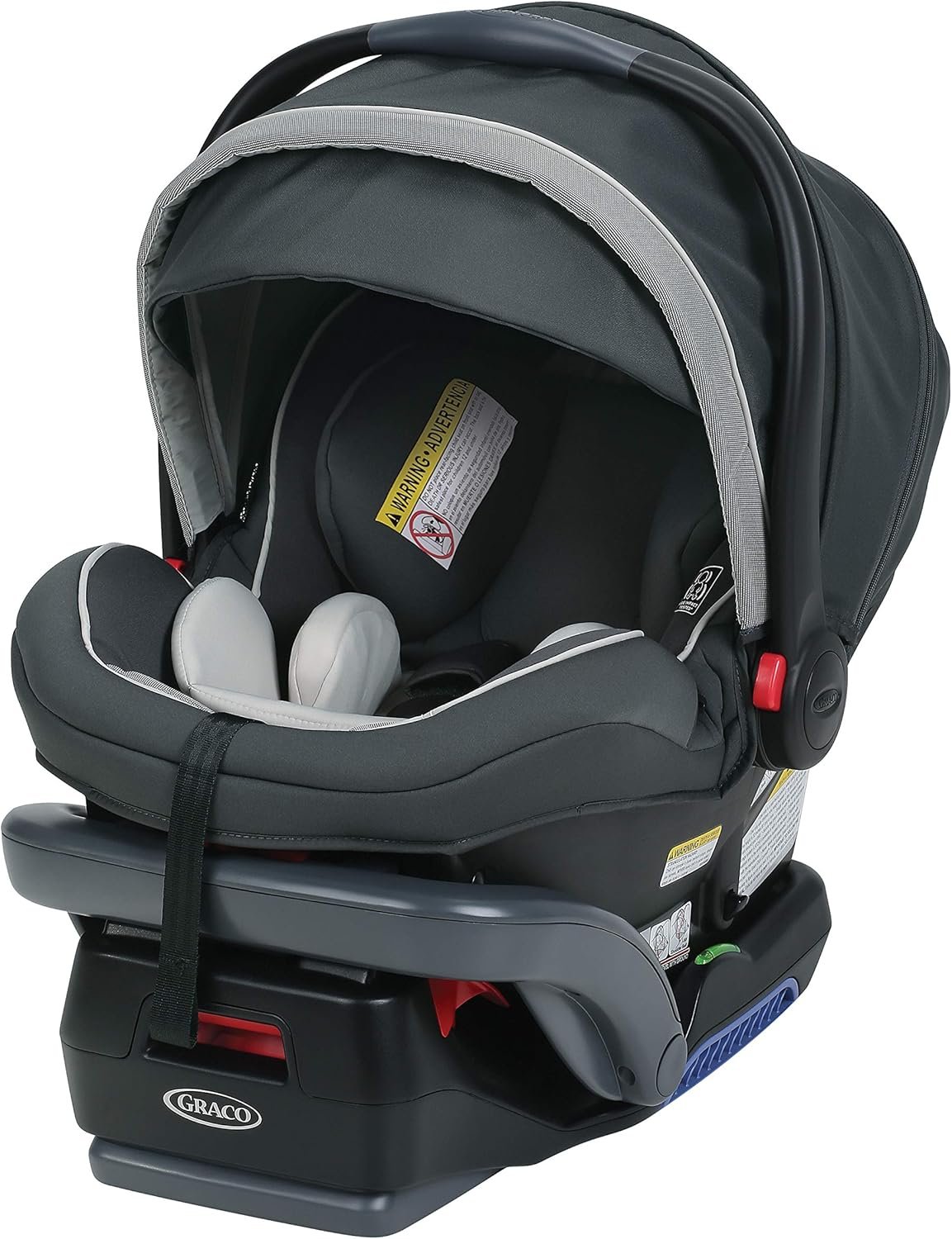
Our Graco SnugRide SnugLock 35 Elite review covers installation, harness fit, weight and height limits, and safety features, all checked against Graco's own manual.

Maxi-Cosi Mico Review: Lightest Premium Infant Car Seat
In-depth Maxi-Cosi Mico infant car seat review. We analyze the ultra-lightweight design, self-wicking fabrics, Air Protect technology, and travel system compatibility.