Affiliate Disclosure:Kid Sitting Safe is reader-supported. When you buy through links on our site, we may earn an affiliate commission at no additional cost to you. This does not influence our reviews or recommendations — we only recommend products we genuinely believe in.
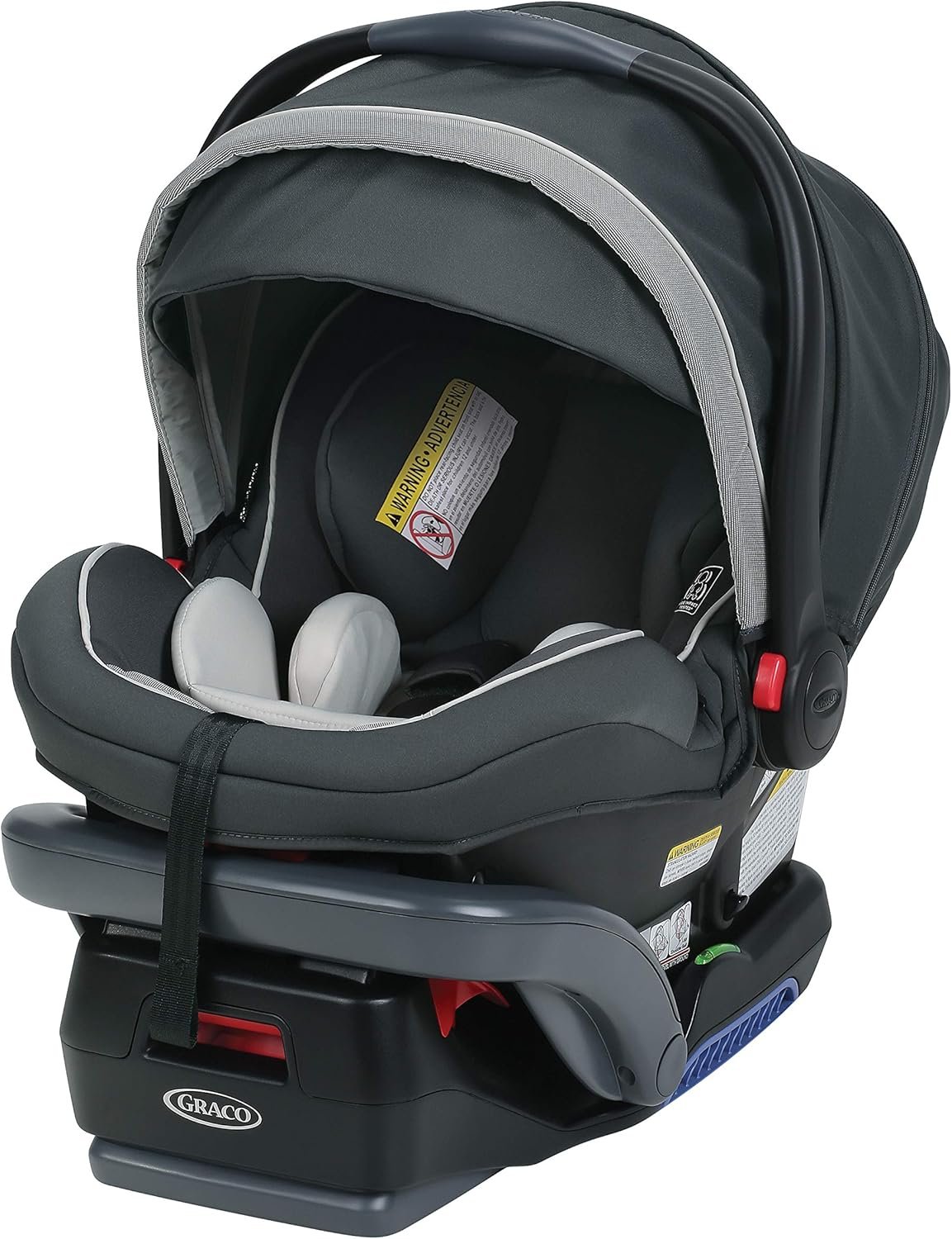
Graco SnugRide SnugLock 35 Elite
Discontinued, for existing ownersA capable rear-facing-only seat whose limits are all confirmed in Graco's own manual: 4-35 lb, 32 inches, seven-year life. It's no longer made, and Graco's current infant range is the SnugFit line, so treat this as a reference for owners rather than a buying recommendation.
What We Like
- Rear-facing to 35 lb, at the top of the infant-seat range
- SnugLock lock-off arm clamps the belt or LATCH strap down, so you aren't fighting the seat for tension
- No-rethread harness: the head support and harness height move together on one set of buttons
- Carrier is certified for use in aircraft when used without the base
- Click Connect attachment to Graco strollers carrying the Click Connect logo
What We Don't
- Discontinued. Graco no longer lists it and the ASIN in this record is gone from Amazon's catalogue
- No anti-rebound bar. Graco's later SnugFit seats added one
- Graco never published a carrier weight for this trim, and independent measurements disagree
- The base is not certified for aircraft, so flying means carrying the carrier on its own
- Body pillow is only for infants of 12 lb or less, and it isn't fitted to every model
The Graco SnugRide SnugLock 35 Elite was Graco’s answer to a fair question: how much infant seat do you actually need? It carried a 35-pound rear-facing limit, the same cap the premium seats use, on a seat that sold well below them.
One thing up front. Graco has stopped making it. Search gracobaby.com today and the SnugLock 35 Elite doesn’t come back; the SnugFit seats are Graco’s current infant range. If you already own one, everything below still applies, and the limits come straight out of Graco’s manual for this exact model. If you’re shopping, read this as background rather than a recommendation.
This review covers installation, harness fit, the weight and height limits, and how the seat compares to the Chicco KeyFit 35. Note that the Chicco KeyFit Max ClearTex has now succeeded the KeyFit 35 as Chicco’s current infant flagship (it keeps the integrated anti-rebound bar, drops the rear-facing cap from 35 to 30 lbs, and is certified to FMVSS 213a and 213b); the comparisons below remain accurate for the KeyFit 35 itself.
What You Get
Graco’s manual lists the parts you’d expect and a couple you might not. On the carrier: a carry handle with a release button, a canopy, a head support, harness covers, and on some models a body pillow. The base is removable and holds the SnugLock lock-off arm, the belt guides, a recline lever with four positions, a bubble level indicator, and a slot that stores the manual on the seat itself.
Two of those parts come with limits. Graco says the body pillow is for babies of 12 pounds or less, and if your model didn’t include one, the manual tells you a rolled towel does the same job. The head support stays in, and it’s also what sets your harness height.
Graco fits this trim with Safety Surround side-impact protection, and the base carries what Graco calls SafetyCore energy absorption. Neither is a number you can hold up against another brand, so read them as construction details rather than a score.
Key Features
The SnugLock Lock-Off
SnugLock isn’t a self-routing system, whatever the box implied, and the difference matters when you’re kneeling in a footwell.
It’s a lock-off arm. You route the LATCH strap or the vehicle seat belt through the base’s blue rear-facing belt path yourself, following the belt guides, and pull the slack out. Then you close the SnugLock arm down over the belt until it clicks. That arm holds the tension, so you’re not trying to compress the base and cinch a strap in the same motion.
Graco’s manual is firm on two points. Use the seat belt or LATCH, never both at once. And once it’s in, the base must not move more than an inch at the belt path, side to side or front to back. The carrier can also go in without the base, but on a vehicle seat belt only; LATCH isn’t available for the carrier on its own.
Misuse is common enough that NHTSA runs a national network of inspection stations to catch it. A lock-off helps because it takes away the step people most often get wrong, which is holding tension while they buckle.
How Much It Weighs
This is the spec that’s hardest to pin down, and the number quoted most often is the wrong one.
Graco never published a carrier weight for the Elite. It isn’t in the manual and the product page is gone. The figure that circulates, 7.5 pounds, belongs to the plain SnugLock 35 rather than the Elite trim, which carries a heavier cover and the Safety Surround structure.
The only source to weigh the Elite specifically is Consumer Reports, at 9 pounds for the carrier and 19 pounds for carrier plus base. Amazon lists the packaged system at 18.8 pounds, close enough to corroborate. Against the Chicco KeyFit 35’s 10-pound carrier that’s a real saving, but a modest one, not the three-pound gap the 7.5 figure implies.
Click Connect Stroller Compatibility
Click Connect lets the carrier attach to a Graco stroller with a single click. Graco built Click Connect strollers across most of its price range, so a travel system was easy to assemble around this seat.
One caveat from the manual, and it’s a safety one rather than a convenience one: use the carrier only with strollers carrying the Graco Click Connect logo. Graco warns explicitly against using it on another manufacturer’s stroller, because a carrier that looks like it has seated properly on the wrong frame can come off.
Weight and Height Limits
Weight Range
Four to 35 pounds. That covers most babies from birth through approximately 12-15 months. The 35-pound weight limit matches premium competitors like the Chicco KeyFit 35.
Height Limit
Thirty-two inches, which is standard for infant seats. There’s a second rule alongside it that gets missed: Graco’s manual says the top of your child’s head must stay at least an inch below the top of the carrier. Plenty of babies hit that mark before the tape measure says 32 inches, and when they do, the seat is outgrown regardless of what the number says.
The AAP and NHTSA both recommend children stay rear-facing until they reach the maximum rear-facing height or weight for their seat, and Graco’s manual repeats that advice on its own opening pages. Whichever limit comes first is the one that counts.
Real-World Longevity
Most babies outgrow infant seats by height before weight. A baby in the 75th percentile for height reaches 32 inches around 15 months. The 35-pound limit gives capacity for larger babies, but height is usually what determines when you transition.
Installation and Daily Use
Base Installation
Either LATCH or the vehicle seat belt works, and Graco treats them as equally safe. The routing paths are marked, and the base has four recline positions set by a lever and a foot that extends underneath it.
Get the recline right before you worry about tightness. The bubble on the level indicator has to sit under the blue lines that match your baby’s age, and if the foot is fully extended and the bubble still isn’t there, Graco’s own fix is to raise the foot and put a rolled towel under it. That’s in the manual, not a workaround someone invented.
Carrier Attachment
The carrier clicks into the base, and the release lever sits at the back. Graco’s instruction is to pull up on the carrier after seating it to confirm it’s locked, and do it every time rather than trusting the sound.
Harness Adjustment
The harness tightens with a single pull at the front. Graco’s test for tight enough is a good one: when you can’t pinch any webbing at your child’s shoulder, stop.
Harness height is where this seat is better than its reputation. There’s no rethreading. You squeeze the red buttons behind the head support, slide the head support up or down, and the harness height moves with it. The only thing you ever rethread is the crotch buckle, which has two positions and is a change you’ll make once.
Commit Graco’s fit rules to memory. Harness straps must sit at or just below your child’s shoulders. Buckle the chest clip separately, then pull the slack out around the waist on both sides before you tighten. For a low birth weight baby, down to the 4-pound minimum, Graco describes a way to shorten the buckle by moving the crotch strap clip into the front slot without threading it through the pad.
Daily Handling
The handle has positions for carrying, rocking and storage. Canopy coverage is modest next to seats with the oversized canopies that became common later, which is a comfort trade rather than a safety one.
Safety Features
What It’s Certified To
Graco’s manual states that this restraint “meets or exceeds all applicable requirements of Federal motor vehicle safety standard 213 for use in motor vehicles.” That’s FMVSS 213, the federal standard every child restraint sold in the US has to meet, and its crash test is a frontal one.
Side impact is a separate standard, FMVSS 213a, and it arrived years after this seat did. So the honest framing is that the SnugLock 35 Elite is certified to the standard that applied when it was built, and it predates the side-impact rule entirely. That’s a real difference from a seat manufactured today, and it’s the strongest argument for buying current rather than hunting down old stock.
It’s also FAA certified, with a catch that trips people up at the gate: the carrier is certified for use in aircraft only when used without the base, on forward-facing aircraft seats. The base is explicitly not certified. Flying means carrying the carrier alone.
Side Impact Protection
This trim ships with what Graco calls Safety Surround, and the base carries SafetyCore energy absorption. Both are Graco’s own naming rather than a tested rating, so there’s no number to compare against another brand, and neither is a substitute for certification to FMVSS 213a.
Head Support and Body Pillow
The head support does two jobs. It positions a newborn’s head, and it’s also the mechanism that sets harness height, so it stays in the seat for the life of the child.
The body pillow is the part with a limit. Graco says it’s for infants of 12 pounds or less, and it isn’t fitted to every model in the range. Whichever you have, the manual warns never to let it bunch or fold behind the child, because padding behind a baby’s back is what lets a harness go slack in a crash.
Pros and Cons
Pros
The SnugLock lock-off arm takes the hardest part out of a belt install, because it holds tension for you. The harness is no-rethread, which on a seat at this price was genuinely unusual. Rear-facing capacity runs to 35 pounds and 32 inches, matching seats that cost considerably more, and Click Connect opened up most of Graco’s stroller range.
Cons
Graco has stopped making it, which is the con that outranks the rest. It has no anti-rebound bar, a feature Graco’s later SnugFit seats added. It predates FMVSS 213a, so it was never certified to the federal side-impact standard. The canopy is modest, and Graco never published a carrier weight, so the one figure buyers most want is the one nobody can source.
Who Should Buy This?
Not a seat to go shopping for, because Graco discontinued it. If you already own one, the question is different and the answer is reassuring: check the date of manufacture on the label, confirm you’re inside seven years, confirm nobody has crashed in it, and use it. A secondhand one is a different matter: the AAP says to avoid a used seat if you don’t know its history, and to check the label for the date it was made.
If you’re shopping now, the useful comparison is against seats certified to the current side-impact standard. The Chicco KeyFit 35 adds a SuperCinch LATCH tightener; see Chicco KeyFit vs Graco SnugRide: Best Infant Car Seat? for the head-to-head. Graco’s own SnugFit seats are the direct continuation of the SnugLock idea, and they add the anti-rebound bar this one lacks. If carrier weight is what drew you to Graco, the current SnugRide Lite LX is the light one: Graco’s product description gives 7.2 pounds for the carrier, with a 4-30 lb, 32-inch rear-facing range, so the cap is five pounds lower than this seat’s. Our best infant car seat brands guide covers the current field.
Verdict
Judged on what it was, this was a lot of seat for the money. The limits are honest, the lock-off works, the no-rethread harness was a real upgrade at the price, and there’s nothing in Graco’s manual that suggests a corner was cut on the things that matter.
Judged on what to buy today, it’s history. It’s out of production, it has no anti-rebound bar, and it was certified before the side-impact standard existed. Those aren’t marks against how it was made; they’re the reason the current generation is a better buy.
When your baby does outgrow an infant seat, you’ll want a convertible for extended rear-facing. See our guide to the Best Rear-Facing Car Seats 2026: Extended Rear-Facing Picks.
Rating: 4.5/5, for the seat as it was sold. Not a buying recommendation today.
Also Consider
Graco SnugRide Lite LX Lilac Mod
Graco's current lightweight seatUltra-lightweight carrier with excellent Graco ecosystem compatibility in a pretty lilac pattern.
What We Like
- Ultra-lightweight 7.2 lb carrier - one of the lightest available
- Lilac Mod purple-pink pattern
- ProtectPlus Engineered for frontal, side, rear, and rollover protection
- One-step secure connection to Graco strollers
- Rotating canopy with sun shade
What We Don't
- 30 lb weight limit (lower than some competitors)
- Lilac shade leans more purple than pink
Chicco KeyFit Max ClearTex Infant Car Seat
Best infant seatThe KeyFit Max ClearTex is Chicco's step up from the KeyFit 35: it keeps the integrated anti-rebound bar and adds a one-hand adjustable handle and explicit FMVSS 213a/b compliance. Note that Chicco rates it to 30 lb, against the KeyFit 35's 35 lb.
What We Like
- Carry handle raises and lowers with one hand, and Chicco lists FMVSS 213a side-impact compliance, neither of which its KeyFit 35 page claims
- Integrated anti-rebound bar adds stability and extra legroom for rear-facing
- SuperCinch push-on lower LATCH connectors make a tight installation achievable with minimal force
- Integrated European belt routing for secure baseless installation in taxis, rideshares, or grandparent cars
- 5-position no-rethread harness with an extra inch of headroom vs the KeyFit 30
- Meets FMVSS 213b frontal impact standard and FMVSS 213a side impact standard; GREENGUARD Gold and Baby Safety Alliance verified; FAA approved
What We Don't
- Heavy carrier at 10 lbs, tiring for parents carrying it daily
- Canopy needs two hands to extend fully
- Belt threading under the guides is tedious for baseless installation
- No load leg (a feature Cybex, Nuna, and UPPAbaby offer at higher price points)
Chicco KeyFit 30
Best premium alternativePremium option if budget allows.
What We Like
- SuperCinch LATCH for easy, secure installation
- Top-rated installation by CPSTs
- Premium padding and infant support
- ReclineSure leveling system for proper angle
What We Don't
- Higher price than many competing infant seats
- Heavier carrier (9.5 lbs) compared to lightweight alternatives
- 30 lb limit means earlier outgrowth than KeyFit 35
- Only 3 harness height positions and a single crotch-strap position
- 6-year lifespan from manufacture, shorter than the 10 years Chicco give their all-in-one seats
Sources & Research
- Graco SnugRide SnugLock 35 Elite instruction manual PD349483C (8/16), models 8AX125 / 8AX25. Primary source for every limit above
- Consumer Reports, Graco SnugRide SnugLock 35 Elite. Independent cross-check of the 4-35 lb / 32 in limits, and the only Elite-specific carrier weight measurement
- Amazon Product Page
- Graco Official Page
- Chicco USA Official Product Page
- Chicco KeyFit Max Infant Car Seat Product Manual
- The Car Seat Pros Review
- Amazon Product Listing
- Chicco USA KeyFit 35 ClearTex Product Page (for comparison)
- Chicco USA Official Product Page
- Chicco KeyFit 30 Car Seat Product Manual (03-2020)
- Amazon Product Listing
Continue Reading
Explore more car seat reviews content or browse our other categories.
Frequently Asked Questions
- What is the weight limit for the Graco SnugRide SnugLock 35?
- The Graco SnugRide SnugLock 35 accommodates infants from 4 to 35 pounds and up to 32 inches tall. This weight range covers most babies from birth through their first year. According to AAP guidelines, you should transition to a convertible seat when your baby reaches either the weight or height limit, whichever comes first.
- How does the Graco SnugLock installation work?
- SnugLock is a lock-off arm built into the base. You route the LATCH strap or the vehicle seat belt through the blue-marked rear-facing belt path yourself, pull the slack out, then close the SnugLock arm over the belt until it clicks. The arm holds the tension so you aren't bracing the base with your knee while you tighten. Graco's manual is clear that you use the seat belt or LATCH, never both at once, and that the base should not move more than an inch at the belt path. A bubble level indicator on the base shows whether the recline angle is right for your baby's age.
- Is the Graco SnugRide SnugLock 35 compatible with all strollers?
- The Graco SnugRide SnugLock 35 uses Graco's Click Connect system, which is compatible with all Graco Click Connect strollers. It does not attach directly to strollers from other brands. For non-Graco strollers, you may need a universal car seat adapter or frame stroller designed for infant seats.
- How much does the Graco SnugRide SnugLock 35 Elite weigh?
- Graco never published a carrier weight for this seat, and it isn't in the manual either. Consumer Reports weighed the Elite at 9 pounds for the carrier and 19 pounds for carrier plus base, and Amazon lists the packaged system at 18.8 pounds, which lines up. Figures of 7.5 pounds circulate widely, but those belong to the plain SnugLock 35 rather than the Elite trim, so treat this as a mid-weight infant carrier rather than a notably light one.
- How does the Graco SnugRide SnugLock 35 Elite compare to the Chicco KeyFit?
- They're closer than the marketing suggests. Both the Elite and the KeyFit 35 take a child rear-facing from 4 to 35 pounds and up to 32 inches, and both carriers land around 9 to 10 pounds once you use measured figures rather than published ones. The KeyFit adds a SuperCinch LATCH tightener. The bigger practical difference now is that Graco has stopped making the SnugLock 35 Elite, so the KeyFit line and Graco's own SnugFit seats are the ones you can actually buy.
Written By
Kid Sitting Safe
Our team researches car seat safety standards, crash test data, and real-world usability to help parents make the safest choice.
Related Articles

Cybex Car Seat Reviews: German Engineering for Child Safety
Cybex car seat reviews covering the current Callisto G 360 rotating seat and Aton G2 infant seat, plus the retired Sirona S, Cloud Z and Aton 2, with SensorSafe and load leg details from Cybex's manuals.
Maxi-Cosi Mico Review: Lightest Premium Infant Car Seat
In-depth Maxi-Cosi Mico infant car seat review. We analyze the ultra-lightweight design, self-wicking fabrics, Air Protect technology, and travel system compatibility.
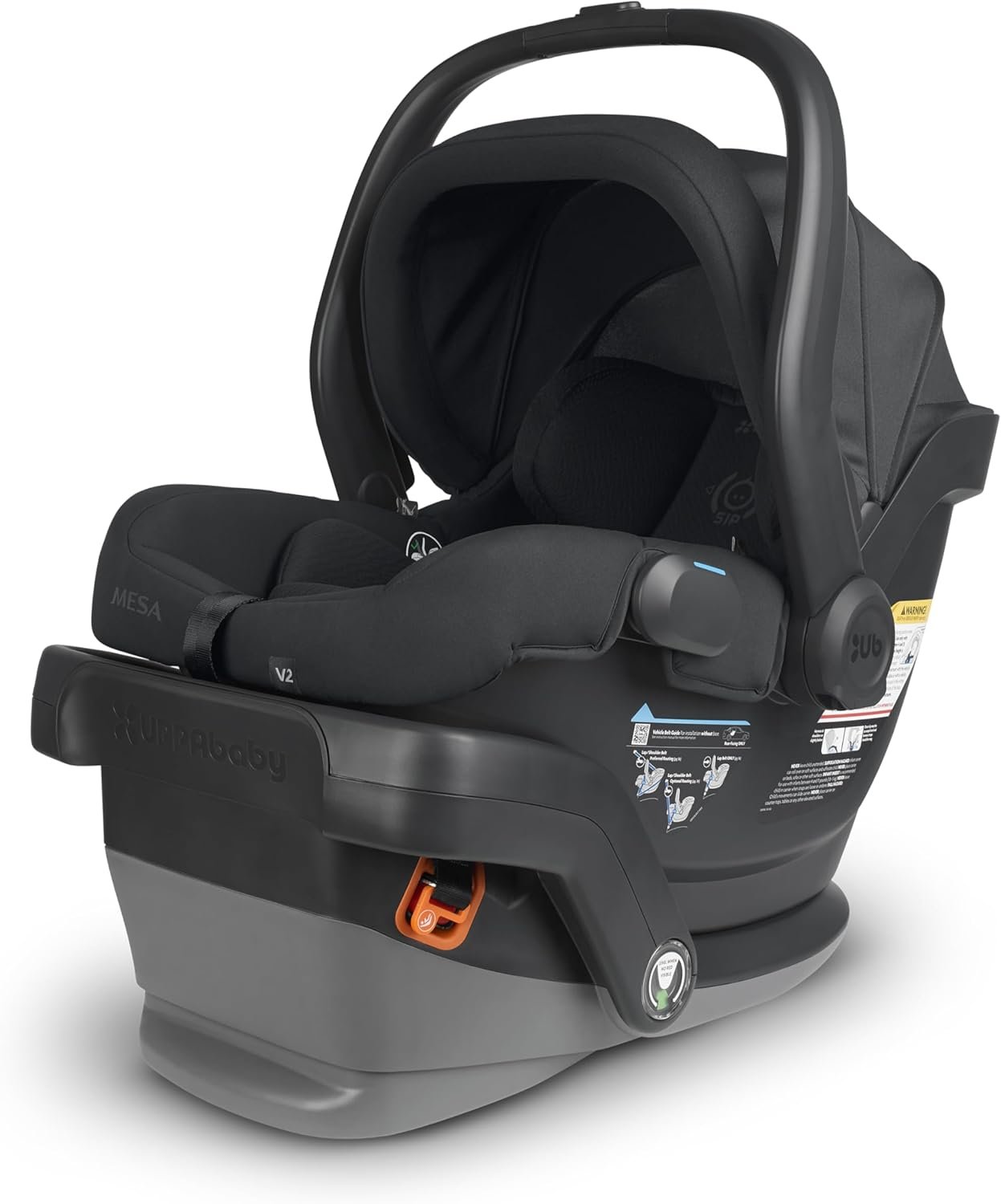
UppaBaby Mesa Review: V2 vs V3 (and Whether Either Is Worth It in 2026)
UppaBaby Mesa V2 vs V3 review for 2026. What changed in the V3, what the retired V2 means if you're offered one, where the Mesa wins, and how it stacks up against the Nuna Pipa RX and Clek Liing on independent crash tests.